


The concept that computing machines could move beyond simple calculation to perform any abstract operation — the defining phenomenon of computer technology — dates back to the 1840s, thanks to Ada Lovelace, a pioneering mathematician and computer scientist.
Working with Charles Babbage on the theoretical Analytical Engine in the mid-19th century, Lovelace created what is considered the world’s first computer algorithm. She recognized that computation was not just arithmetic but the execution of step‑by‑step instructions — what we now call algorithms — a precursor to the general‑purpose computer. This profound realization — that numbers could represent entities other than quantity — launched the idea of universal computation, a century before it was realized.
Even more prescient, Lovelace articulated the limitations, arguing that “The Analytical Engine has no pretensions to originate anything. It can do whatever we know how to order it to perform.” Known as “Lady Lovelace’s Objection,” this philosophy is still at the heart of the AI debate.
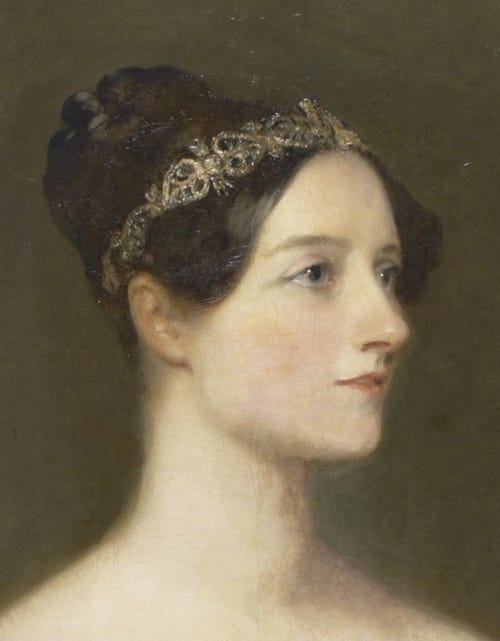
Lovelace’s philosophical insight was so profound that when computers finally arrived 100 years later, researchers recognized they were still grappling with the exact question she had framed. In his famous 1950 paper “Computing Machinery and Intelligence,” Alan Turing addressed nine objections to the idea of machine intelligence — and Lady Lovelace’s Objection was among them, because her insight remained the most compelling articulation of why machines might never truly “think.” Her objection wasn’t outdated; it was ushering in the era of computation.
Today, modern AI systems produce outputs their creators never explicitly programmed. In 2016, Google’s AlphaGo defeated Lee Sedol, one of the world’s greatest Go players, using moves that stunned observers and were later adopted by human players — strategies no programmer had taught it. Yet all AI algorithms still require massive quantities of human-generated data and are designed according to principles established by human engineers. The debate hinges on how we define “origination.” If it means producing something humans didn’t program step-by-step, then AI already challenges Lovelace’s objection. If it means true creativity with intent and understanding—the capacity to anticipate genuinely new truths independent of human input—then her objection still stands. The question remains philosophically unresolved.
Recently heard about the work of Dr. Gladys West
https://www.goodreads.com/book/show/54556721-it-began-with-a-dream
Really glad that these pioneers are being recognized